


Catholics (Roman and Orthodox), as well as Anglicans and Lutherans, recognize Mary as the mother of God. Likewise, it was so acknowledged by some fathers of the Protestant Rupture (Luther and Zwingli, though not Calvin). The fact that the majority of Protestants rejected this doctrine was due to later developments. These same doctrinal developments are causing some of them to now recognize this title for Mary again. What is the reason for this growing change of mind? Because they are better informed about what this title really means and where it comes from.
Notice: This article is a (human) English translation from our original Spanish site. Expect links marked in yellow, if any, to open articles in Spanish at the moment.
The traditional Protestant argument was that Mary cannot be the mother of God because that would mean that she is a divine being who has engendered God and therefore would be prior to him in existence, just as a mother is prior to her child and the one who gives birth to him and gives him life; something like an eternal mother goddess and prior to God himself. No wonder most of them consider this title a huge heresy. But let’s see here what is the true meaning of this dogma, why it was promulgated and where in the Bible we find references to this truth.
The Theotokos
The language of the early Church was Greek, and Mary was called “the Theotokos.” The word “theotokos” comes from “theos” (God, as in theology, the science that studies the things of God) and “tokos” (to give birth), therefore the literal translation of theotokos would be “the one who gives birth to God” (or she who bears God or simply God bearer).
Now, if Rachel conceives and gives birth to Tim, we say without hesitation that Rachel is the mother of Tim. For this reason, in the primitive Church the titles “Theotokos” and “Meter Theou” (Mother of God) were both widely used and always considered until today perfect synonyms, without nuances. In the western part, where little by little Latin was imposed as the language of the Church, the terms were translated as Dei Genetrix (God-bearer) and Mater Dei (Mother of God), but the term that prevailed for both cases was that of “Mater Dei”, the translation used in English too. Nevertheless, to better understand the data that we will discuss in this article, bear in mind that in all this controversy the term that will be discussed is specifically that of Theotokos, being the form Meter Theou a direct consequence of the former.

Council of Ephesus
As always happens, a dogma is not promulgated to create a new truth, but to officially declare that a truth that was already in the Church cannot be denied. And that happens when a heretical sector arises that challenges that truth. That is why this Catholic belief passes through the years without problems and is not declared a dogma until the year 431, at the Council of Ephesus, precisely because it is then when the heretical voice that wanted to question it arose.
In the fourth century the heresy of Apollinarianism appeared, which said that the Logos (2nd person of the Trinity, the Son) would have incarnated taking only a human body, but not a human soul. The image they used was as if God put on a suit, where the suit was the human body. This idea went largely unnoticed, but in the fifth century a monk with Apollinarian ideas caused a riot by publicly stating that Mary was not the mother of God, but only the maker of the “garment” of meat that God put on.
They asked the patriarch of Constantinople, Nestorius, to intervene in the matter, and the patriarch, perhaps looking for a middle way or because he did not fully understand the nature of Jesus, explained that Jesus was 100% God and 100% man, and since being a man implies the union of body and soul, Mary did not just make a “suit”, but gave birth to a real man, with body and soul… (so far so good) …to be later joined by the divine Logos. And this is where Nestorius got into trouble, because when they asked him for clarifications, he explained that Jesus was born as a complete man and then God dwelt in him. That is why Mary would be the Christotokos (mother of Christ, the man), but in no way would she be the Theotokos (mother of God), since she only gave birth to the man; the God would come later. With that, he tried to settle the controversy, partly agreeing with the Apollinarian monk but so that, according to him, orthodoxy would be preserved. Serious mistake.
Instead of ending the controversy, Nestorius only succeeded in creating a much larger one. Bishop Cyril of Alexandria raised his voice to explain the dire consequences that would follow from Nestorius’s explanation. Both went to the Pope in Rome to condemn the position of the other as heretical, and in short, they ended up summoning a council at Ephesus where Nestorianism was condemned and orthodoxy was reaffirmed saying that Jesus has two natures (human + divine) together in one person (hypostasis) without separation, so that saying that Mary was the mother of Jesus necessarily implied that she was the mother of God. But evidently not in the sense of being prior to God and having created Him, but in the sense of having given birth to him, hence the technical term “theotokos” (she who gave birth to God), which is the term used by the Council of Ephesus to reaffirm, now dogmatically, that Mary is the mother of God. These would be, schematically, the different positions.
Apollinaris:
Jesus = (Logos + human body) =
God = 1 divine person
Nestorius:
Jesus = Christ [man (body + soul)] … birth … + Logos =
man + God = 2 persons
Ciryl (apostolic doctrine):
Jesus = [man (body + soul) + Logos] … birth & death & resurrection =
100% man AND 100% God = 1 person, human and divine at once
Let’s see both positions in more detail.

Nestorius vs. Ciryl
NESTORIUS: He affirmed that Jesus has two natures (divine and human) independent of each other, although joined and working in perfect harmony. God is eternal and impassible, so that he cannot be contained or be born or suffer or die, these are human features and therefore they are to be attributed to Jesus the man (Christ), but not to Jesus God (the Logos). Christ was born of Mary, and at some point the Logos infiltrated this man, but as an external element, a kind of illumination of the conscience that inspired and sustained him, but that was not part of his nature, a bit like a man possessed by God, so that when Jesus suffered and died on the cross, the God who inhabited him remained impassive, being affected by none of that.
CYRIL: He quickly realized that the Nestorian explanation of the nature of Jesus assumed that neither God was born of Mary nor did He die for us, so neither God became man nor did He save us. This meant denying Mary the title of “mother of God”, but it also meant denying the Incarnation, since that does not mean that God entered a man, but rather that God became a man, and he did so because the impassive God (= he who cannot suffer) needed to become a man to be able to suffer for us and die on the cross, and that is how he saved us. The death of a man cannot make up for the sins of all mankind; only the death of God can. But if Jesus is truly God made man, a consequence is that Mary is the mother of God. If we cannot separate Jesus’ human nature from his divine nature, neither can we separate Mary’s human maternity from her divine motherhood.
[
"It amazes me that there are some who totally doubt whether the Holy Virgin should be called Theotokos or not. But if our Lord Jesus Christ is God, how is it possible that the Holy Virgin who gave birth to him was not the one who gave birth to God (=the Theotokos) ?

(Cyril of Alexandria, epistle 1 to the monks in Egypt, PG 77:13B, 5th century)
The Council of Ephesus met mainly to discuss what the title of Mary should be, Theotokos (mother of God) or Christotokos (mother of the Messiah), but paradoxically this discussion did not have Mary as the center of attention, but rather focused on the Christology that this title implied, that is, by defining Mary, the council was discussing what the true nature of Jesus was, whether a person with two natures, or rather two different persons circumstantially united. Was Jesus God made man or was he God within a man? In its final declaration, the council says:
[
Mother of God, not because the Word of God has taken his divine nature from her, but because it is from her, from whom he has his sacred body endowed with a rational soul […] united to the person of the Logos, from whom it is said that the Logos was born according to the flesh.

(Council of Ephesus)
Nestorius had tried to rationalize how Jesus could be both true God and true man. Cyril reaffirms the mystery: just as the Trinity is 3 persons but one and indivisible God, Jesus is 2 natures but one and indivisible Christ. Certainly this is an enormous mystery, and this is recognized by the Church in this ancient Byzantine hymn that says: “He whom the whole universe could not contain, was contained in thy womb, O Theotokos” (Menaion, proprium feast of the Presentation of Mary). That is why the angel Gabriel feels compel to add “Nothing is impossible for God.” (Luke 1:37).
From the moment of the Annunciation, the Jesus who appears in the womb of Mary is already the incarnate God-Son, and that God made man will continue to be God and man forever, suffering and dying on the cross for us. God cannot be born, suffer or die, but precisely for this reason he became incarnate in Mary, to add to his being a human nature that would allow him to suffer for us, to make himself accessible, to show us his infinite love, and to die for us so he could bring Salvation to us all. This statement from the Council of Ephesus is something that all Christians (Catholic, Orthodox, Anglican and Protestant) accept, so if we accept the statement, we must also accept what it implies: if Mary is not the mother of God, then Jesus was a man possessed by God, not the Incarnate Logos, and we are not saved!
Of course this has great consequences on the gifts that God pours out on Mary and that we discuss in other articles, but without mixing things up, saying that Mary is the mother of God cannot be denied by any true Christian, unless they deny the Incarnation, which is the basis of all Christianity. And it is for this reason that many Protestants today are accepting this dogma, although they tend to clarify that they accept the title of mother of God “only in the sense that Jesus was incarnated within her”, as if by making this clarification they were marking distances with the Catholic faith, when that is what we Catholic Christians have always claimed for 2000 years.
But the fact that Mary is the mother of God is not only inferred from the fact that Jesus is true God and true man. This belief is also found in the Bible and in Tradition, so let us now follow the trail of this doctrine in both places.
In the early Church

As we have said, Ephesus did not invent this dogma, but simply declared its inviolability. Christians had always understood that Jesus was at the same time and without possible division God and man, as the Council of Nicaea had already defined it a century before:
[
Deum de Deo, lumen de lumine, Deum vero de Deo vero … et incarnatus est de Spiritu Sancto ex Maria Virgine, et homo factus est.

(God from God, light from light, true God from true God… by the power of the Holy Spirit he was born of the Virgin Mary, and became man.)
But the concrete expression of “theotokos” had probably not become popular until the third century, which is when we begin to find it in writing. From this century is a quote from Origen of Alexandria in his “Commentary on Romans”―although some question the correctness of this quote― and specially the oldest Marian prayer preserved, which we Catholics still recite to Mary so many centuries later: Sub tuum praesidium (under your protection), which translated reads:
[
Beneath thy compassion,
We take refuge, O Mother of God:
do not despise our petitions in time of trouble:
but rescue us from dangers,
only pure one, only blessed one.
Around those same years, in 250, Dionysius of Alexandria used the word “Theotokos” in a letter he wrote to Paul of Samosata. Also in the third century, this term was already frequent in the Syriac liturgy, and a few decades later also in the Byzantine liturgy of St James. Little by little the term spread everywhere. Sometime between the years 336 and 361, Saint Athanasius wrote his apology “Against the Arians”, where he says:
[
It was for us that Christ became man, taking his flesh from the Virgin Mary, Mother of God (Theotokos).
This mention is of special importance because Athanasius, a leading bishop in the fight against Arianism, is not only revered by Catholics, but is also highly respected by most Protestants, who also consider him a champion of orthodoxy.
A century later, in 431, the Council of Ephesus put an end to the controversies that were being raised by declaring that Christ was truly God, and therefore Mary was not only the mother of Christ, but also the mother of God. Let’s look at the main text of the final resolution of the council, a resolution that speaks of the nature of Jesus, but at the end and as a necessary tagline is where it is mentioned that if Jesus was truly God, then his mother gave birth to God:
[
For we do not say that the nature of the Word was changed and became flesh, or that it was converted into a whole man consisting of soul and body; but rather that the Word having personally united to himself flesh animated by a rational soul, did in an ineffable and inconceivable manner become man, and was called the Son of Man, not merely as willing or being pleased to be so called, neither on account of taking to himself a person, but because the two natures being brought together in a true union, there is of both one Christ and one Son; for the difference of the natures is not taken away by the union, but rather the divinity and the humanity make perfect for us the one Lord Jesus Christ by their ineffable and inexpressible union.... For he was not first born a common man of the Holy Virgin, and then the Word came down and entered into him, but the union being made in the womb itself, he is said to endure a birth after the flesh, ascribing to himself the birth of his own flesh. On this account we say that he suffered and rose again; not as if God the Word suffered in his own nature stripes, or the piercing of the nails, or any other wounds, for the Divine nature is incapable of suffering, inasmuch as it is incorporeal, but since that which had become his own body suffered in this way, he is also said to suffer for us; for he who is in himself incapable of suffering was in a suffering body… This was the sentiment of the holy Fathers; therefore they ventured to call the Holy Virgin, the Mother of God, not as if the nature of the Word or his divinity had its beginning from the Holy Virgin, but because of her was born that holy body with a rational soul, to which the Word being personally united is said to be born according to the flesh.

(Council of Ephesus, Denzinger 111ª)
Just as we said before, what the council says about Mary follows logically from what the council has said about Jesus. Protestants for the most part also accept this resolution from Ephesus, although only as regards the nature of Jesus, failing to grasp the logic of that final conclusion regarding Mary, although probably not because they reject that logic, but because of the confusion already mentioned at the beginning.
Where is that in the Bible?

The Annunciations
Although the term theotokos took years to emerge (at least as far as we know) and the dogma was not officially declared until even later, the belief that Mary is the mother of God has been in the Church from the beginning, and we can trace it all the way to the Bible. To verify this, let’s go to the moment in which Mary becomes the Theotokos, the moment of the incarnation.
In the first chapter of Luke we are presented with two announcements. In the first, the angel St Gabriel appears to Zechariah and announces that he will have a son; in the second the same angel appears to Mary and also announces that she will have a son. Let’s look at the enormous difference between the angel’s attitude in both cases:
[
a) ZECHARIAH: Then the Angel of the Lord appeared to him, standing to the right of the incense altar. Seeing him, Zechariah was puzzled and afraid. But the Angel told him: «Do not be afraid, Zechariah, your plea has been heard. Elisabeth, your wife, will give you a son whom you will call John […]» But Zechariah said to the Angel: «How can I be sure of this? Because I am old and my wife is old.» The Angel answered him: «I am Gabriel, the one who is before God, and I have been sent to speak to you and announce this good news to you. You will remain mute, unable to speak until the day these things happen, because you did not believe in my words, which will come to pass in due time.» (Luke 1: 11-20)
[
b) MARY: The Angel entered her house and greeted her saying: "Rejoice! Full of grace, the Lord is with you." Hearing these words, she was taken aback and wondered what that greeting could mean. But the Angel told her: «Do not be afraid, Mary, because God has favored you. You will conceive and give birth to a son, and you will name him Jesus […]». Mary said to the Angel: «How can that be, if I don't have relations with any man?». The Angel answered her: «The Holy Spirit will descend upon you and the power of the Most High will cover you with his shadow. That is why the child will be Holy and he will be called the Son of God […] because there is nothing impossible for God» (Luke 1:28-37)
Both scenes have great parallels:
1- At the appearance of the angel Gabriel, they both are frightened.
a) Seeing him, Zechariah was puzzled and afraid.
b) Hearing these words, she was taken aback and wondered what that greeting could mean.
2- The angel reassures them.
a) Do not be afraid, Zechariah, your plea has been heard.
b) Do not be afraid, Mary, because God has favored you.
3- and announces the conception of a child under miraculous circumstances.
a) your wife will give you a son whom you will call John.
b) You will conceive and give birth to a son, and you will name him Jesus.
4- The person alluded to, frightened, marvels that such a thing can be possible:
a) «How can I be sure of this? Because I am old and my wife is old.»
b) «How can that be, if I don’t have relations with any man?»
The nature of the child to come, as explained by the angel, is of great difference, of course, but the dialogue between the angel and the listener (Zechariah/Mary) is basically the same. The reaction of the listeners up to this point in the scheme is very similar. However, to see the difference in attitude that the angel shows with one and with the other we have to look at the beginning and the end of each dialogue, there we find the great difference and the proof that the angel feels that he is addressing two types of vastly different people, despite the fact that both react apparently in the same way.

Beginning of the dialogue:
1- with Zechariah: Then the Angel of the Lord appeared to him, standing to the right of the incense altar.
Gabriel doesn’t say anything, he just appears, and until Zechariah doesn’t show fear, he doesn’t intervene saying “don’t be afraid”. This is the usual procedure of the angels as seen in the Bible, angels simply appear and reassures with their “do not be afraid”, before going on to give their message.
2- with Mary: The Angel entered her house and greeted her saying: “Rejoice! Full of grace, the Lord is with you.”
Contrary to what is normal in angelic apparitions, and as we saw shortly before with Zechariah, Gabriel in this case begins with a greeting, and what a greeting! He dedicates an epithet to Mary that we will not find in the Bible for anyone else: κεχαριτωμενη (kejaritomene), “full of grace”, or more literally “the one who has been given grace”, since it comes from a passive past. In other words, it is not a matter of God filling her with grace in the future, when she conceives Jesus, but rather that God already filled her with grace in the past, which fits with the Catholic doctrine that Mary was born without sin, so that it was at her conception when God filled her with grace saving her from sin. In addition, this word is not used as a descriptor (adjective), but as a title (noun), which is the usual thing behind the greeting χαιρε (Hail), a greeting normally reserved for important people —in the Bible we only find this greeting addressing the king, Jesus and Mary. Much as the famous “Hail Caesar!”, the angel literally said χαιρε κεχαριτωμενη (Hail, the one who has been filled with grace), but let’s not deviate from the subject at hand.
Let us now see the end of both dialogues. As far as we have analyzed, Zechariah and Mary both react by being surprised at something impossible. But the angel’s reaction to that surprise is totally different in each case:
[
1- with Zechariah: «I am Gabriel, the one who is before God, and I have been sent to speak to you and announce this good news to you. You will remain mute, unable to speak until the day these things happen, because you did not believe in my words, which will come to pass in due time.»
The angel, angry for not being believed at first, makes it very clear that Zechariah is nobody to question his words, and reminds him who he is: “Gabriel, the one who is before God“, leaving implicit, but clear, the idea of: who are you, worm, to doubt what I tell you, I who am the main messenger of God? It is the reaction of a powerful minister to the vacillation of a foolish beggar. If you’ll excuse the metaphor.
[
2- with Mary: The Angel answered her: «The Holy Spirit will descend upon you and the power of the Most High will cover you with his shadow. That is why the child will be Holy and he will be called the Son of God […] because there is nothing impossible for God».
Mary’s fiat (“May it be done to me according to thy word”) will come later, for now Mary, just like Zechariah, is baffled by such hard-to-believe news. But if in the face of Zechariah’s doubt Gabriel reacts angrily and arrogant and even punishes him by leaving him mute for having doubted, with Mary we see nothing of that, but rather we see the angel, all sweet and courteous, eager to explain to her in detail who it is that will be born and how it will happen: «The Holy Spirit will descend upon you and the power of the Most High will cover you with his shadow. That is why the child will be Holy and will be called the Son of God». He even gives Mary the explanations that he did not give to Zechariah: “Your relative Elizabeth also conceived a son despite her old age, and the one who was considered barren is already in its sixth month, because there is nothing impossible for God”.
Considering that the angels are sent by God to give a message, and that they act in the name of God, we can see that the difference in treatment in both cases is not only a different reaction of the angel, but a different action of the very God who sends him. With Zechariah we see an Almighty God speaking to a frightened subject with all his authority. With Mary we see a tender and complacent God whose first words are emotional (“Rejoice!”) and who gently soothes her fears away and clears up her doubts. He is not a powerful man dealing with a subject, he is a God-son speaking lovingly with his future mother. And Gabriel, as envoy, seems to be well aware of that difference.
The Visitation

For those who are not impressed by deductions, however clear they may be, and insist on “yes, yes, but where does it say in the Bible that she is “mother of God?” we also have the answer, and it’s just a few lines later, when Mary goes to visit her cousin Elizabeth, Zechariah’s wife:
[
and entered into the house of Zacharias and saluted Elisabeth. And it came to pass, when Elisabeth heard the salutation of Mary, the babe leaped in her womb; and Elisabeth was filled with the Holy Spirit; and she lifted up her voice with a loud cry, and said, «Blessed art thou among women, and blessed is the fruit of thy womb. And whence is this to me, that the mother of my Lord should come unto me?»

(Luke 1:40-43)
Elizabeth’s words, like those spoken by the angel before, are equally admirable, but it should be noted that according to the Bible these words are not a spontaneous reaction of Elizabeth, but rather it is God himself who puts those words on Elizabeth’s lips (and Elisabeth was filled with the Holy Spirit… and said…), so let’s pay close attention to what words those are because they come from God. In addition to declaring her “blessed art thou among women,” placing her above any other woman in creation (not above all men because she is not above Jesus), she says:
[
And whence is this to me, that the mother of my Lord should come unto me?
The key here is in the word “Lord”, which in the original Greek reads “Kyriou” (“of my Lord”, genitive of “Kyrios”). In the Greek version of the Old Testament (the Septuagint), “Kyrios” is a term used very frequently to refer to God, but in the New Testament, which was written in Greek, it is even much more frequent. This is because out of respect for the name of God, the Jews after the Exile stopped reading the word “Yahweh” aloud, always substituting it for “Adonai“, which in Hebrew means “my Lord” and which in Greek translates as Kyrios, and that is the way we usually find it in the New Testament, written in Greek; never Yahweh, but Kyrios, “my Lord”. And that same formula, used here by Elizabeth, we find it also used by Thomas in his famous confession:
[
Then saith he to Thomas, Reach hither thy finger, and see my hands; and reach hither thy hand, and put it into my side: and be not faithless, but believing. Thomas answered and said unto him, «My Lord and my God!». Jesus saith unto him, «Because thou hast seen me, thou hast believed: blessed are they that have not seen, and yet have believed.»

(John 20:27-29)
«My Lord and my God!», says Thomas the moment he recognizes that who is before him is his Lord, his God and savior; just as Christians to this day still call Jesus “the Lord”. Similarly, when Elizabeth calls Mary —by inspiration of the Holy Spirit— “the mother of my Lord,” she is exactly saying “the mother of God.” This divine revelation is the same as what we see in Peter’s confession of faith:
[
And Simon Peter answered and said, Thou art the Christ, the Son of the living God. And Jesus answered and said unto him, Blessed art thou, Simon Bar-Jonah: for flesh and blood hath not revealed it unto thee, but my Father who is in heaven.

(Matthew16:16-17)
In the case of Thomas, it is Thomas himself who declares that Jesus is the Lord, that is, he is God, because he himself has verified with his fingers that Jesus has risen, thanks to the help that Jesus (the Son) gives him. In Peter’s case it is God (the Father) who has made it known to him. And in the case of Elizabeth, it is also God (the Holy Spirit) who has revealed it to her. Of course, Elizabeth’s statement, like those of Thomas and Peter, refer to Jesus; Elizabeth is acknowledging that the child that Mary carries inside is none other than God, just as in her womb John jumps for joy in the presence of God, but precisely the way Elizabeth says that the child Jesus, still in the womb of Mary, is God, is by saying that Mary is the mother of God. And that is exactly what we Catholics do: when we say that Mary is the mother of God, we are affirming that from his gestation in Mary’s womb, the child Jesus was God, and not a mere human waiting to be possessed by God 30 years later at baptism. Nestorius was wrong.
That title though does not mean that Mary is the mother of the triune God, of course not. Mary was not the mother of God-Father, nor of God-Holy Spirit, she was the mother of God-Son because she conceived him in her womb when she was incarnated (not before). That is why the Church defines Mary as the daughter of the Father, wife of the Holy Spirit and mother of the Son.
Perhaps for this reason, in Catholic theology Mary is considered more specifically intercessor before her son Jesus, not before the triune God, although on the other hand it is understandable that the differences between God-Son and God-Trinity are diffuse and blurred, since the Son is God, not just a part of God, and we cannot treat all this as if there were three different gods —although to make this dogma clearer we have sometimes had to explain things almost as if it was so. That is why it is not necessary to say “mother of God-Son” to be precise, because just as we affirm with all truth that Jesus is God, with no need to specify that he is God-Son, in the same way Mary is mother of God and there is no need to be more specific. After all, the Trinity is a mystery, and God is one and only one and indivisible.
The expression “Theotokos“
We have already seen that the concept of “mother of God” is taken from the Bible, and that is enough. But for some Protestants with little Bible training that is not enough, if the word itself does not appear expressly in the Bible, they will say that it is unbiblical (unless it is a word that they use, such as “Trinity” or “sola scriptura”). At the Council of Ephesus the dogma is recorded under the name of “Theotokos“, as we have already seen, so let’s see where the first Christians got this word from.
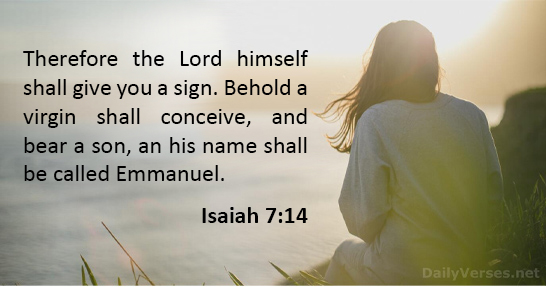
We saw that “The Theotokos” in Greek is actually a phrase: “the woman who gives birth (tokos) to God (Theos)”, so we are going to look for that phrase in the Bible, and we find it, in both Testaments:
[
Now all this is come to pass, that it might be fulfilled which was spoken by the Lord through the prophet, saying, Behold, the virgin shall be with child, and shall give birth to a son, And they shall call his name Immanuel; which is, being interpreted, God with us.

(Matthew 1:22-23)
Mary is “the Virgin who shall give birth to God“, that is, the Theotokos. That Greek term is not an invention designed to name a Biblical concept, but is itself a Biblical phrase compacted and condensed to its basic terms. It is the prophecy of Isaiah summed up to its minimum expression.
Worshipping Mary?

The hoax or misunderstanding that Catholics adore Mary is common among Protestants. We have already seen that considering Mary mother of God does not mean that we consider her divine, but that we believe in Jesus’ Incarnation. Protestants have a very simplified form of Christianity, having eliminated many elements from primitive Christianity —several books of the Bible, most of the sacraments, saints, images, works of mercy, relics, etc. etc. In their relationship with the spiritual world, they have eliminated all physical elements and, furthermore, they can only have a relationship with God. That is why it is very difficult for them to process that we have a relationship with God but also with the angels and saints (including Mary). We worship God, but also venerate the angels and saints. And since all they can do is worship God, any other relationship we have with the spiritual world must also be, according to their mentality, worship. Also, everything they do to worship God (eg pray, kneel, etc.) they logically consider to be expressions of worship.
We are not going to go into the difference between adoration and veneration in depth here because we would go off the topic (and we have already explained it in this other article), but we will give a brief brushstroke of the enormous difference that exists between both things for us Catholics. Since ancient times, throughout the world, including the Israel of the Old Testament, the main element of worship to God or the gods was the offering of sacrifices. We see it already from the story of Cain and Abel. The Israelites sacrificed and burned animals, but they also offered Yahweh the so-called “bread of offerings.” Christians from the start continued to offer sacrifices to God, but they were no longer animals, but a new “bread of offerings”, the Eucharist. A sacrifice necessarily implies the shedding of blood (that is why Cain’s offering was not accepted by God), and this new bread, together with the wine, is not a simple offering, but a true sacrifice because it is the body of the Lamb of God whose blood is poured out (in an eternal present) for us for the forgiveness of our sins, as Jesus himself explained at the Last Supper.
Christians met to break bread, and before eating it they offered it to God. Without going into much detail about what the Eucharist is for Catholics and Protestants (you can find out more in this other article), let’s simply make it clear that for a Catholic, the supreme act of worship is the Eucharist, the holy mass, where we consecrate the bread and wine and we offer them to God as an actualization of Jesus’ sacrifice on the cross (actualization, not repetition). Whether it is understood or not, we Catholics adore God most of all by offering him the bread and wine as the sacrifice, and we only offer that to God. If we adored Mary, we would also have to make sacrifices to her, perhaps we would also offer her bread and wine, but that never happens because we venerate Mary (we greatly respect her), but we do not adore her because she is not divine, only human. Even when we make a mass in honor of Mary (or a saint), the sacrifice is still directed solely to God, since we only adore him.
We see this very clearly in the ancient Church. Saint Epiphanius of Salamis, in the 4th century, condemned as heretics a sect in Arabia, the so-called “Collyridians” (from the Greek “collyris” = bread, cake). According to him, in this sect the women baked bread buns and offered them to Mary as a sacrifice is offered to the gods, to later eat them themselves. Perhaps they also offered the wine, but we have no details, only a brief mention. As we can see, it is very reminiscent of the Eucharist, offering bread to God and eating it afterwards. It would be different if they offered Mary bread, cakes or whatever as a symbolic gift asking for her intercession to God, but never as a sacrifice aimed at herself as the final objective. St Epiphanius of Salamis explains it very well in this criticism of the Collyridians:
[
It is ridiculous and, in the opinion of the learned, totally absurd, since those who, with an insolent attitude towards Mary, are suspected of doing these things, have been harming the minds of the people (…) the people who bow down in that direction are guilty of doing the worst harm. (…) Let Mary be honored. Let the Father, the Son, and the Holy Spirit be adored, but let none adore Mary.

(Epiphanius, Panarion, year 374)
An idea that shortly before had been summarized by St Ambrose of Milan with this gloss: “Mary is the temple of God and is not the God of the temple” (St Ambrose, 4th century). That same doctrine is the one that the Catholic Church continues to defend, and so we can read it in the Catechism:
[
"All generations will call me blessed" (Lk 1, 48): "The veneration of the Church to the Blessed Virgin is an intrinsic element of Christian worship". The Blessed Virgin “is rightly honored by the Church with a special cult. And, indeed, since the most ancient times, the Blessed Virgin has been venerated with the title of 'Mother of God', under whose protection the faithful supplicants are welcomed in all their dangers and needs… This cult… although completely singular, it is essentially different from the cult of adoration that is given to the Incarnate Word, the same as to the Father and the Holy Spirit, but it favors it very powerfully”.

(Catechism of the Catholic Church 971)
Mary, like the saints, is venerated (or is honored, as Epiphanius words it) with all kinds of honors that can equally be given to famous living humans: with offerings (gifts), prostrations or genuflections (as we see so many times in the Bible before kings and other important people), with supplications (petitions), with prayers (conversations), etc. What can never be done with the saints, Mary or distinguished living humans is to offer them a sacrifice, which is only for God. That difference between adoration and veneration existed in Israel, existed throughout the ancient world, and continues to exist among Catholics today as yesterday.
We Catholics are not free to interpret the biblical texts as we want (and this is also addressed to more than one modern Catholic theologian), we are only the heirs of the doctrines in which those first Christians who came out of the catacombs believed. They said that Mary was the Mother of God, and we, who are their heirs, can only confess that we believe in the same things that they believed, since they are, without possible discussion, the Church that Jesus founded. What they believed, we believe and for us no more justification is needed than that, that is why our doctrines are sometimes, under the Church’s authority, refined but never change, because the Truth is immutable.


[Click on the banner to access the index of the complete series]



 Apologia 2.1 in English
Leave a reply to andrews Cancel reply